

Renaud Detry
I am an Associate Professor of Robot Learning at KU Leuven in Belgium, with a dual appointment in the Electrical and Mechanical Engineering groups (PSI and RAM). Previously, I served as group lead for the Perception Systems group at NASA JPL, Pasadena, CA, and held an Assistant Professorship at UCLouvain, Belgium. My research interests lie in robot learning and computer vision, particularly concerning robot manipulation and space robotics. I am an Associate Editor for IEEE Transactions on Robotics (T-RO), a member of the ELLIS Society, a member of the steering committee of Leuven.AI, and a technical advisor for Opal-AI.com.

Andrej Gams
is the head of the Humanoid and Cognitive Robotics Lab at the Department of Automatics, Biocybernetics and Robotics at Jožef Stefan Institute (JSI). He received his Diploma degree in electrical engineering in 2004, and a Ph.D. degree in robotics from the University of Ljubljana, Slovenia, in 2009. He was a Postdoctoral Researcher with SCIEX NMS-CH fellowship at the Biorobotics Laboratory, Ecole Polytechnique Fédérale de Lausanne, Lausanne, Switzerland, during 2012–13, where he also did a part of his Ph.D. research in 2007–08. He was a visiting researcher at the ATR Computational Neuroscience Laboratories in the summers of 2009 and 2014. He received the Jožef Stefan Golden Emblem Award for Ph.D. dissertation for 2012, the ICRA 2015 Best Reviewer Award, and several other awards. Besides being PI of other national and HORIZON projects, he is the coordinator of project ROMANDIC and PI of a national project on robot handling of textiles called RTFM. His recent work is focused on robot handling and dynamic handling of deformable objects in the scope of these projects, and robot learning, applicable for humanoid and industrial robotics. He has previously contributed to imitation learning and generalization approaches in robot trajectory generation for both discrete and periodic tasks, advanced methods of manipulation and object interaction, human robot interaction and transfer learning.
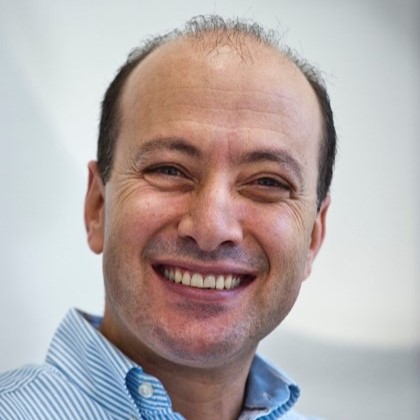
Tamim Asfour
is the Spokesperson of the Robotics Institute Germany (RIG) and Full Professor of Humanoid Robotics at Karlsruhe Institute of Technology (KIT), Germany. He directs the High Performance Humanoid Technologies Lab (H2T) at the Institute of Anthropomatics and Robotics. His research focuses on the engineering 24/7 humanoid robot systems that integrates artificial intelligence, informatics, and mechatronics to perform versatile tasks in the real world while learning from humans, experience and interaction with the environment. Tamim is the developer of the ARMAR humanoid robot family. He has been a visiting professor at Georgia Tech, Tokyo University of Agriculture and Technology, and the National University of Singapore. He is the Editor-in-Chief of the Robotics and Automation Letters (RA-L), Founding Editor-in-Chief of the IEEE-RAS Humanoids Conference Editorial Board, and the scientific spokesperson of the KIT Center “Information · Systems · Technologies” (KCIST).

Irene Garcia-Camacho
I’m a postdoctoral researcher at the Institut de Robòtica i Informàtica Industrial, CSIC. My research is focused on robotic manipulation and benchmarking of deformable objects, particularly textiles. I work on designing shared object sets and task benchmarks to standardize evaluation across the field.

Noémie Jaquier
is an assistant professor at the KTH Royal Institute of Technology, where she heads the Geometric Robot Learning (GeoRob) Lab at the Division of Robotics, Perception and Learning. She received her PhD degree from the Ecole Polytechnique Fédérale de Lausanne (EPFL), Switzerland in 2020. Prior to joining KTH, she was a postdoctoral researcher in the High Performance Humanoid Technologies Lab (H²T) at the Karlsruhe Institute of Technology (KIT) and a visiting postdoctoral scholar at the Stanford Robotics Lab. Her research investigates data-efficient and theoretically-sound learning algorithms that leverage differential geometry- and physics-based inductive bias to endow robots with close-to-human learning and adaptation capabilities.
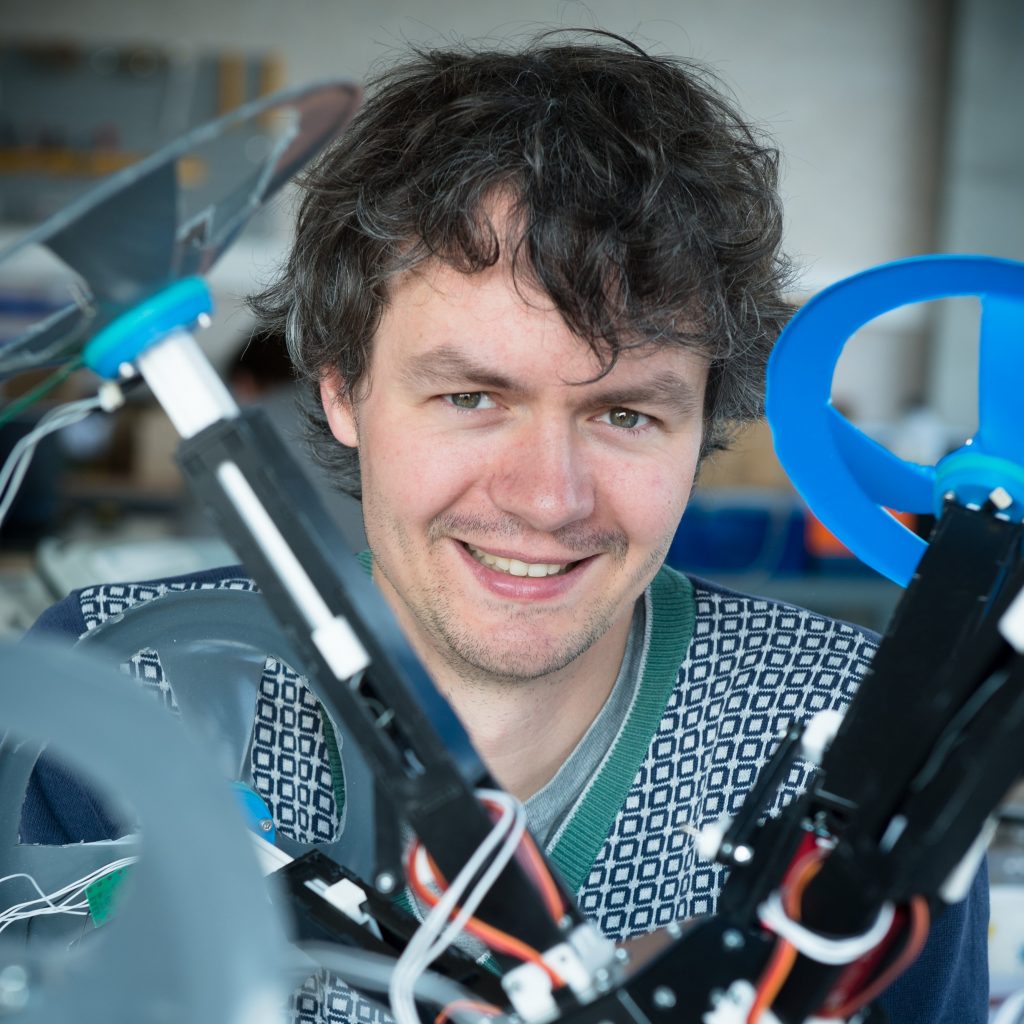
Francis wyffels
is an Associate Professor at Ghent University and imec, where he leads the AI & Robotics Lab (IDLab–AIRO: airo.ugent.be). His research combines artificial intelligence, machine learning, and robotics to develop robots that can see, feel, and help in the real world. Francis’s team is internationally recognised for their advances in robotic manipulation; they won the cloth-folding competition at IROS 2022 and ICRA 2023, and organised the ICRA 2024 Cloth Manipulation Competition. His work builds bridges between academia and industry through collaborative projects on intelligent robot helpers, tactile sensing, and perception. Beyond research, Francis is passionate about bringing AI and robotics closer to society. Through Dwengo (dwengo.org), a non-profit he co-founded, he has reached over 100,000 students and teachers, inspiring the next generation to engage critically and creatively with technology.

Júlia Borràs
is the deputy director of Institut de Robòtica i Informàtica Industrial, CSIC-UPC (IRI). She graduated in Mathematics and Computer Science in 2004 and 2006, respectively, and she obtained her European Ph.D. degree in 2011 working on kinematics and reconfiguration designs for parallel robots and mechanisms. Júlia worked abroad for 6 years as a postdoc, two years at Prof. Aaron Dollar GrabLab group from Yale University and four years at the Karlsruhe Institute of Technology (KIT) with prof. Tamim Asfour H2T group, in Germany. She has contributions on parallel robots, underactuated robot hands, grasping, dextrous manipulation, whole-body motion analysis, humanoid robot locomotion, novel designs for robotic hands and grippers, and robotic cloth manipulation. In 2018 she was awarded a Ramon y Cajal scholarship, one of the most prestigious senior postdoctoral scholarships in Spain. In 2020 she earned a tenured position at the Spanish Scientific Research Council (CSIC) at IRI. Since 2023 she is senior editor at the Robotics and Automation Letters journal for the area of grasping and manipulation.

Gokhan Solak
is a Postdoctoral Researcher in Human-Robot Interfaces and Interaction (HRI²) laboratory of the Italian Institute of Technology (IIT), Genoa, Italy. I am co-supervising multiple doctoral research projects with Arash Ajoudani, including learning-based deformable object manipulation topics. My other research interests include safe learning, contact-rich manipulation, intention prediction and physical human-robot interaction. I received the M.Sc. degree in computer engineering from Istanbul Technical University, Istanbul, Turkey, in 2017, and the Ph.D. degree from Computer Science, Queen Mary University of London, London, U.K., in 2022.
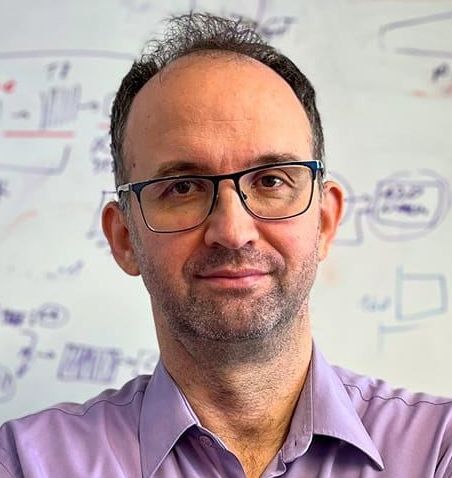
Danijel Skočaj
is a full professor at the University of Ljubljana, Faculty of Computer and Information Science, and the head of the Visual Cognitive Systems Laboratory. His main research interests lie in the fields of computer vision, pattern recognition, deep learning, and cognitive robotics. He has led or collaborated on numerous projects in these areas, including EU projects, national research projects, and industry-funded applied projects. Through research and development activities, he facilitates the transfer of research findings into practical applications. He regularly communicates scientific results to the general public, helping to raise awareness and understanding of AI and related topics. His work has been recognised with several awards, including the 2023–2024 Best Paper Award from the Pattern Recognition journal. He has also served as president of the IEEE Slovenia Computer Society and as president of the Slovenian Pattern Recognition Society.
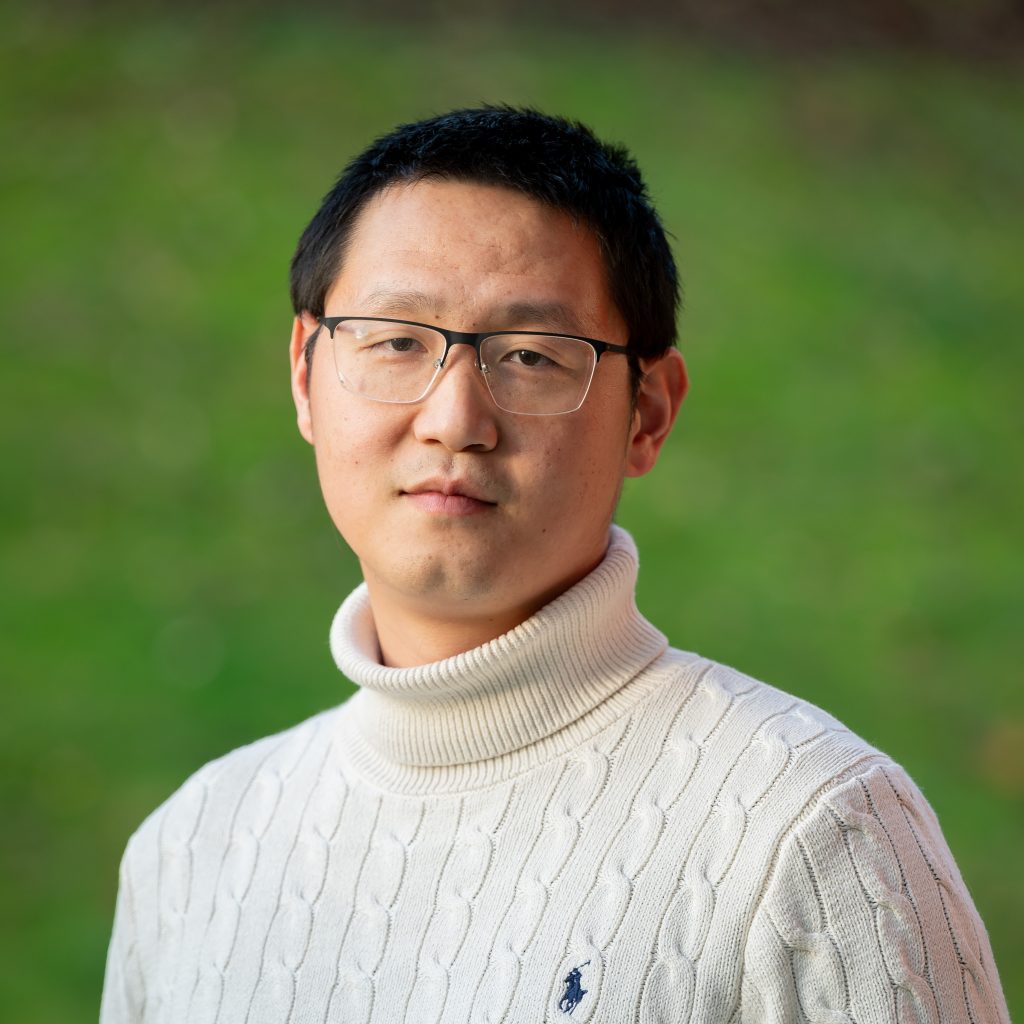
Jihong Zhu
is a lecturer in robotics at the School of Physics, Engineering, and Technology, and an affiliated researcher at the Institute for Safe Autonomy, University of York. He leads the Robot-Assisted Living Laboratory (RALLA) at York, where his research primarily focuses on deformable objects and assistive manipulation. Before joining York, he worked as a postdoctoral researcher at Cognitive Robotics, TU Delft, and Honda Research Institute, Europe. Jihong obtained his PhD at the University of Montpellier, where he conducted his research at LIRMM, supported by the H2020 VERSATILE project. His work on bimanual assistive dressing received media coverage from the BBC, Independent and IEEE Spectrum. He is presently an Associate Editor for IEEE Robotics and Automation Letters (RA-L), ICRA, and IROS. He is the founding co-chair of IEEE RAS Working Group on Deformable Object Manipulation.




The event is technically and/or financially supported by PAL Robotics, ABB, Franka Robotics and EU-project euROBIN (g.a. 101070596).