
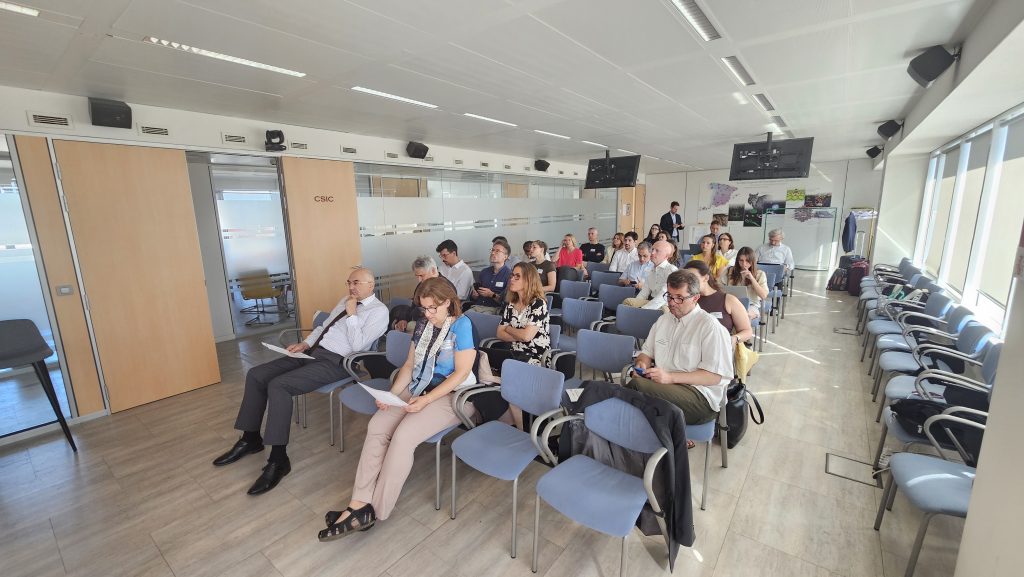
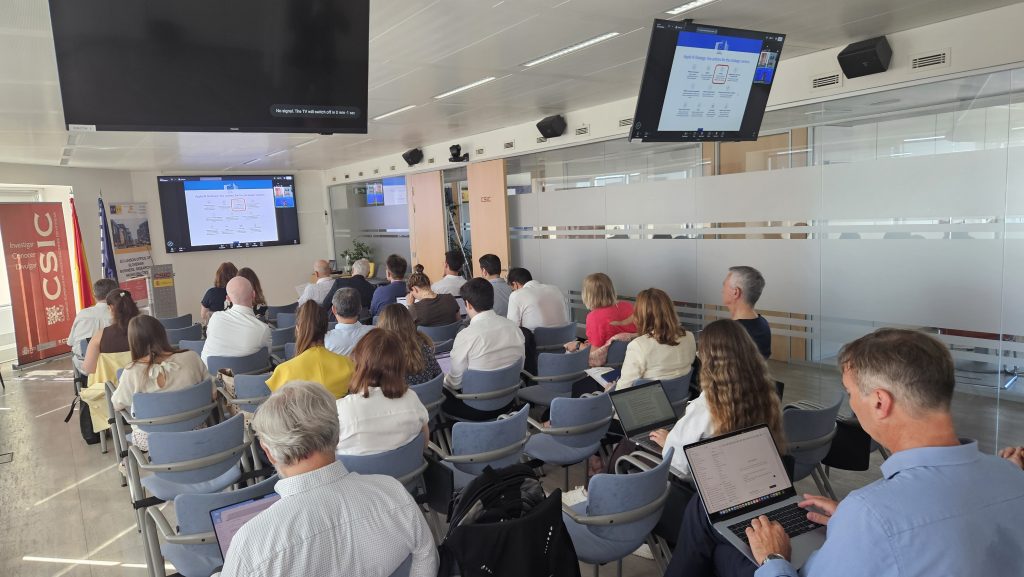
The event “Closing the Automation Gap: Robotics for Textile Handling in Europe contributing to competitiveness” brought together European Commission representatives, textile-sector stakeholders, industry actors, robotics researchers, and European project coordinators to discuss how robotic manipulation of textiles and other deformable objects can move from research promise to industrial impact and what conditions/support is and can be set by the policy and decision makers. Across the presentations, the core message was consistent: Europe has strong scientific capacity and relevant policy momentum, but the field remains fragmented, under-deployed, and not yet sufficiently connected to the realities of textile production, recycling, logistics, and healthcare.
The event summary is available here.
The event agenda is available here.
Conclusions:
- The automation gap is not only technical; it is also a deployment gap. Europe has strong research, but needs better mechanisms to move from prototypes to robust, high-volume, economically viable systems.
- Textile automation is strategically important for competitiveness and circularity. Robotics can support productivity, quality, labour resilience, traceability, Digital Product Passports, sorting, disassembly, fibre recovery, and circular textile value chains.
- Deformable-object manipulation remains difficult because “fabric is not metal.” Textiles and soft materials deform, fold, tangle, degrade, hide their geometry, and vary from item to item, requiring adaptive perception, planning, control, grippers, and learning.
- Europe needs shared testbeds, benchmarks, demonstrators, and pilot lines. Common evaluation environments would help compare approaches, reduce duplication, validate performance, and accelerate industrial uptake.
- SMEs and industrial users need de-risked adoption models. Funding support, outcome-based procurement, Robotics-as-a-Service, experimentation facilities, and integration support are essential for textile companies with limited investment capacity.
- The Network of Excellence should build alliances, not silos. DOM-net and related efforts should connect robotics researchers with textile networks, industry associations, recyclers, policymakers, and automation providers around focused, deployable challenges.
Below please find the videos and presentations from the event.
Session 1: EU policies involving robotic manipulation of textiles
Session 2 – ROMANDIC White Book & Network of Excellence
Session 3 — Fostering Industry Competitiveness: Needs and Opportunities
Marta González Anglés – Strategy & Go-to-market, THEKER
THEKER did not give permission to share the presentation, its summary or the recording of the presentation.
Rebl Industries did not give permission to share the recording of the presentation.
Session 4 — Research Landscape: European Projects on Deformable Object Manipulation
The event was also featured at the webpage of SBRA, which helped in the organization.