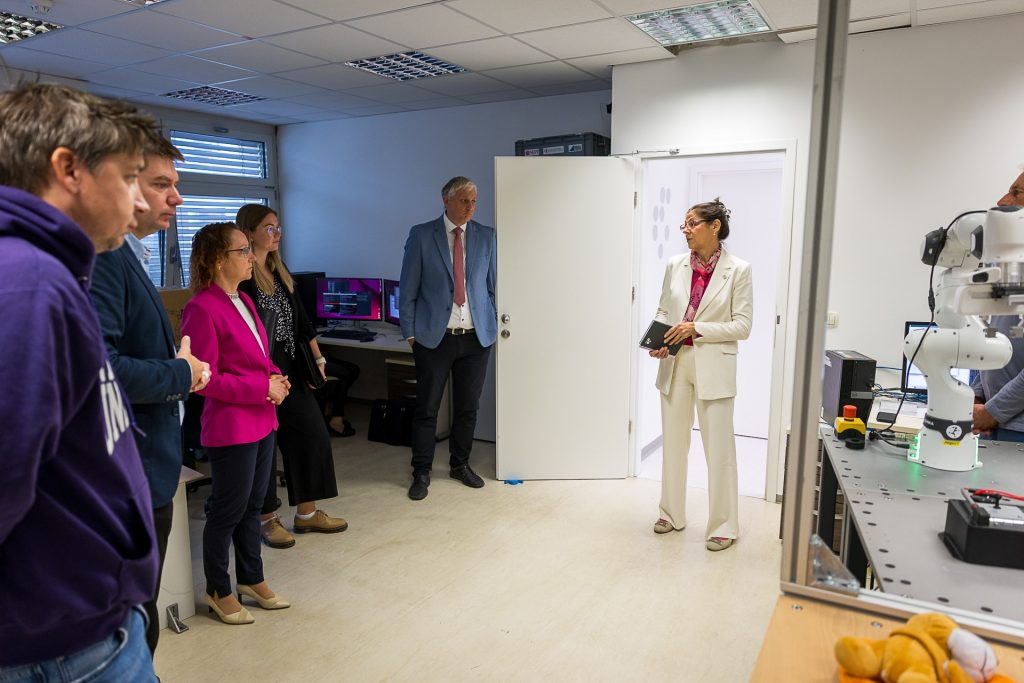
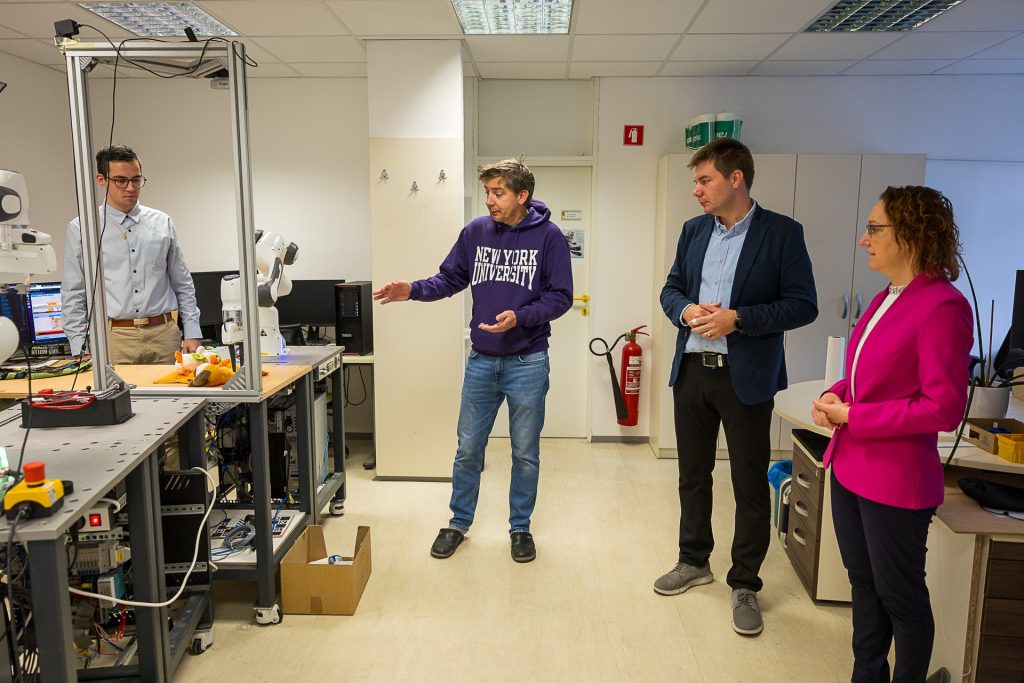
During today’s visit to JSI (06/10/2026), the Minister of Demography, Family and Social Affairs Mateja Ribič visited also our department where we, amongst other things, demonstrated the work on flattening and folding as parts of deformable object manipulation by robots.
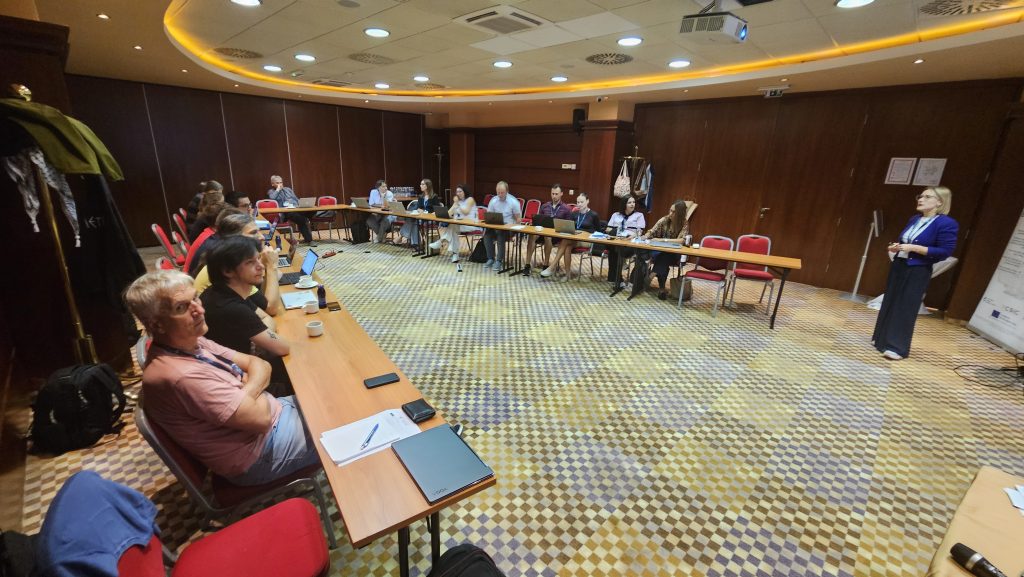
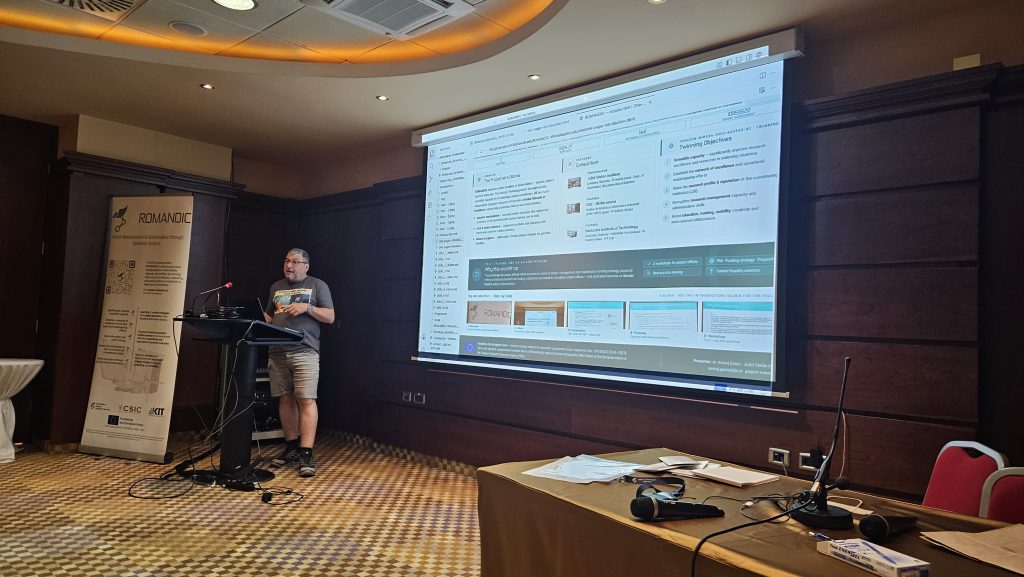
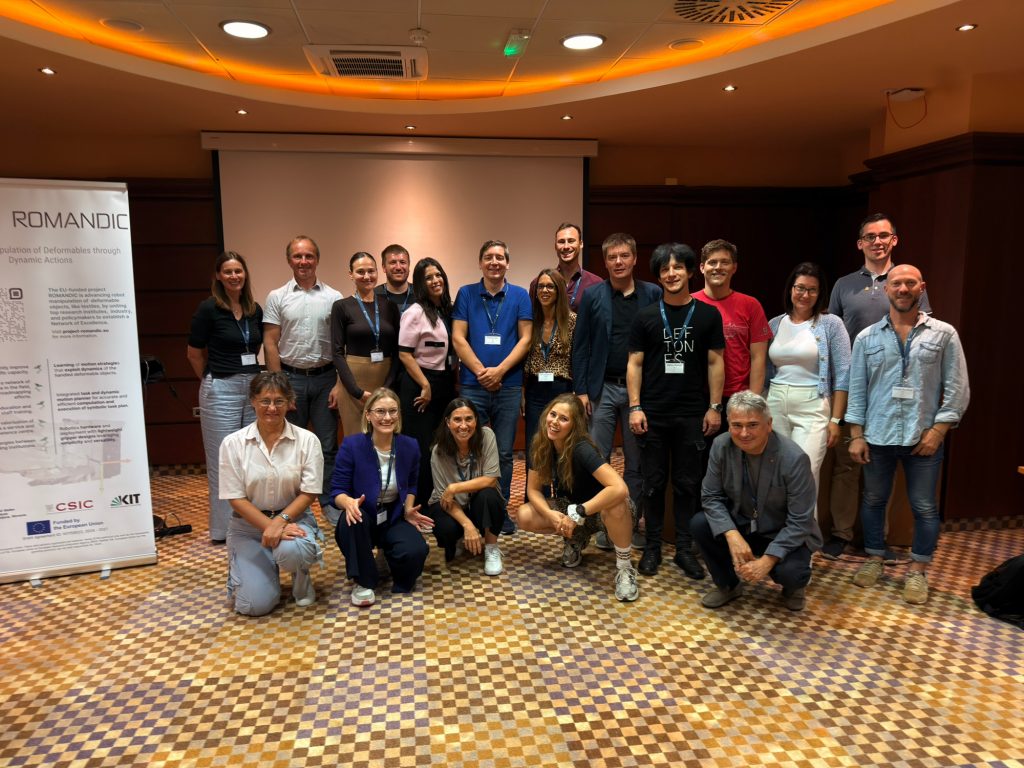
A workshop on the topic of the organization an help of project offices in order to support researchers was held in Portorož, Slovenia, between September 28th and 30th 2026, preceded by a project meeting. In two days of discussions and presentations partners from JSI, CSIC and KIT presented their project offices. We were joined by members of project HERON, which aims to create the first Robotics Center of Excellence (CoE) in Greece for advancing the science and technology of robotics in the AI era, coupled with industrial innovation. Members of their administration joined in our workshop to share experience, but also to gain experience from ROMANDIC institutions.
The participation of people from the project offices is what made this event special, as hands-on experience and organizational structures, ideas, gender aspect and outlooks were shared by the people really working in these fields. The advancement of AI also has an effect on project offices, that is why KIT kindly presented their developments in this field.
All the participants left the event with new, exciting ideas and with memorable impressions.
The work in project ROMANDIC was presented at the evolucija.ai event, a central Slovenian event about AI as the motor of development, at Brdo castle, on September 11th, 2026.
The event “Closing the Automation Gap: Robotics for Textile Handling in Europe contributing to competitiveness” brought together European Commission representatives, textile-sector stakeholders, industry actors, robotics researchers, and European project coordinators to discuss how robotic manipulation of textiles and other deformable objects can move from research promise to industrial impact and what conditions/support is and can be set by the policy and decision makers. Across the presentations, the core message was consistent: Europe has strong scientific capacity and relevant policy momentum, but the field remains fragmented, under-deployed, and not yet sufficiently connected to the realities of textile production, recycling, logistics, and healthcare.
The automation gap is not only technical; it is also a deployment gap. Europe has strong research, but needs better mechanisms to move from prototypes to robust, high-volume, economically viable systems.
Textile automation is strategically important for competitiveness and circularity. Robotics can support productivity, quality, labour resilience, traceability, Digital Product Passports, sorting, disassembly, fibre recovery, and circular textile value chains.
Deformable-object manipulation remains difficult because “fabric is not metal.” Textiles and soft materials deform, fold, tangle, degrade, hide their geometry, and vary from item to item, requiring adaptive perception, planning, control, grippers, and learning.
Europe needs shared testbeds, benchmarks, demonstrators, and pilot lines. Common evaluation environments would help compare approaches, reduce duplication, validate performance, and accelerate industrial uptake.
SMEs and industrial users need de-risked adoption models. Funding support, outcome-based procurement, Robotics-as-a-Service, experimentation facilities, and integration support are essential for textile companies with limited investment capacity.
The Network of Excellence should build alliances, not silos. DOM-net and related efforts should connect robotics researchers with textile networks, industry associations, recyclers, policymakers, and automation providers around focused, deployable challenges.
Together with SBRA and the CSIC’s brussles office, we are organizing the presentation of Whitebook on Robot manipulation of Textiles.
The event will bring together policymakers, researchers, technology developers, and industry leaders to explore how advanced robotics can help close the automation gap in textile manufacturing and recycling.
Registration for the event is open – and required to attend.
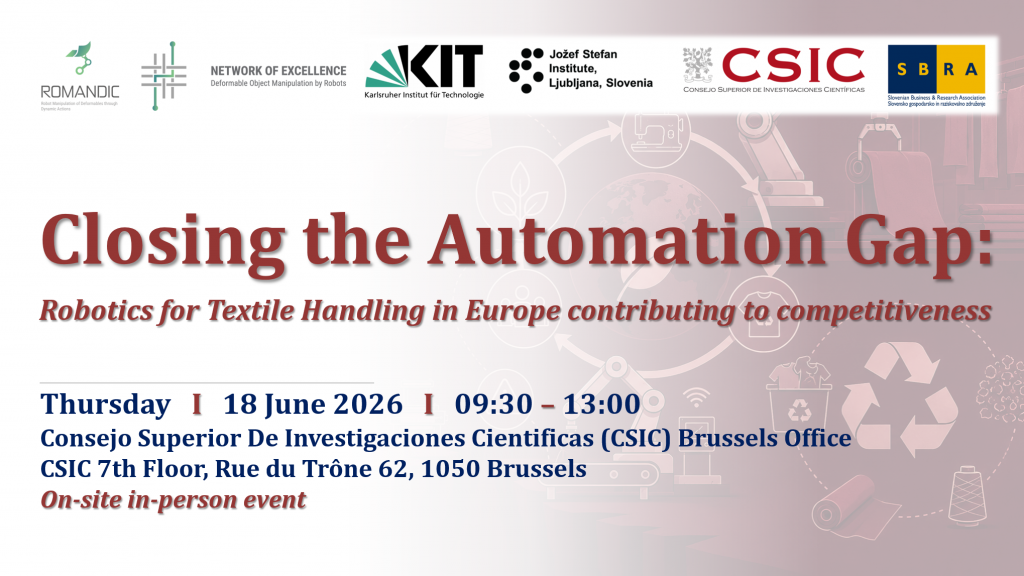
Closing the Automation Gap: Robotics for Textile Handling in Europe contributing to competitiveness
ThursdayI18 June 2026 I09:30 –13:00 Consejo Superior De Investigaciones Cientificas (CSIC) Brussels Office CSIC 7th Floor, Rue du Trône 62, 1050 Brussels
The Slovenian Business & Research Association (SBRA) is pleased to the official launch of the White Book on robotic textile manipulation, created within the ROMANDIC project, taking place on 18 June 2026 in Brussels. Under the theme “Closing the Automation Gap: Robotics for Textile Handling in Europe contributing to competitiveness”, this high-level in-person event will bring together policymakers, researchers, technology developers, and industry leaders to explore howadvanced robotics can strengthen Europe’s textile industry and accelerate the transition toward sustainable and circular production models.
As Europe’s textile sector faces increasing pressure to innovate and remain globally competitive, robotics for textile handling is emerging as a key strategic enabler. The event will provide first-hand insights into the technical challenges of manipulating deformable materials, while presenting a shared European vision and roadmap for textile automation and recycling.
Participants will have the opportunity to:
Discover the White Book on robotic textile manipulation, developed as part of the ROMANDIC project
Engage with representatives from the European Commission on the role of robotics in Circular Economy and Industry 5.0 policies
Explore cutting-edge European research projects including ROMANDIC, SoftEnable, Tornado, and FlexCycle
Hear industrial perspectives on market needs, barriers, and opportunities for automation
Attend the launch of the new European Network of Excellence dedicated to long-term coordination in textile robotics
Participate in a moderated debate on the future of automation and competitiveness in the European textile sector
We would be delighted to welcome you to this important discussion shaping the future of European manufacturing and the circular textile economy!
Discover the full programmehereand registerhereto ensure your place at the event!